"I used to dread checking my bank balance. This guide gave me the absolute clarity I needed to understand where my money was going. I finally feel in control of my boutique's growth."
BO
Bisi O.
Boutique Owner, Lagos
Most Nigerian small business owners are doing business on hope, not numbers. If you don't know basic bookkeeping, you are flying blind. This practical guide teaches you everything you need - in a way even a complete beginner can follow.
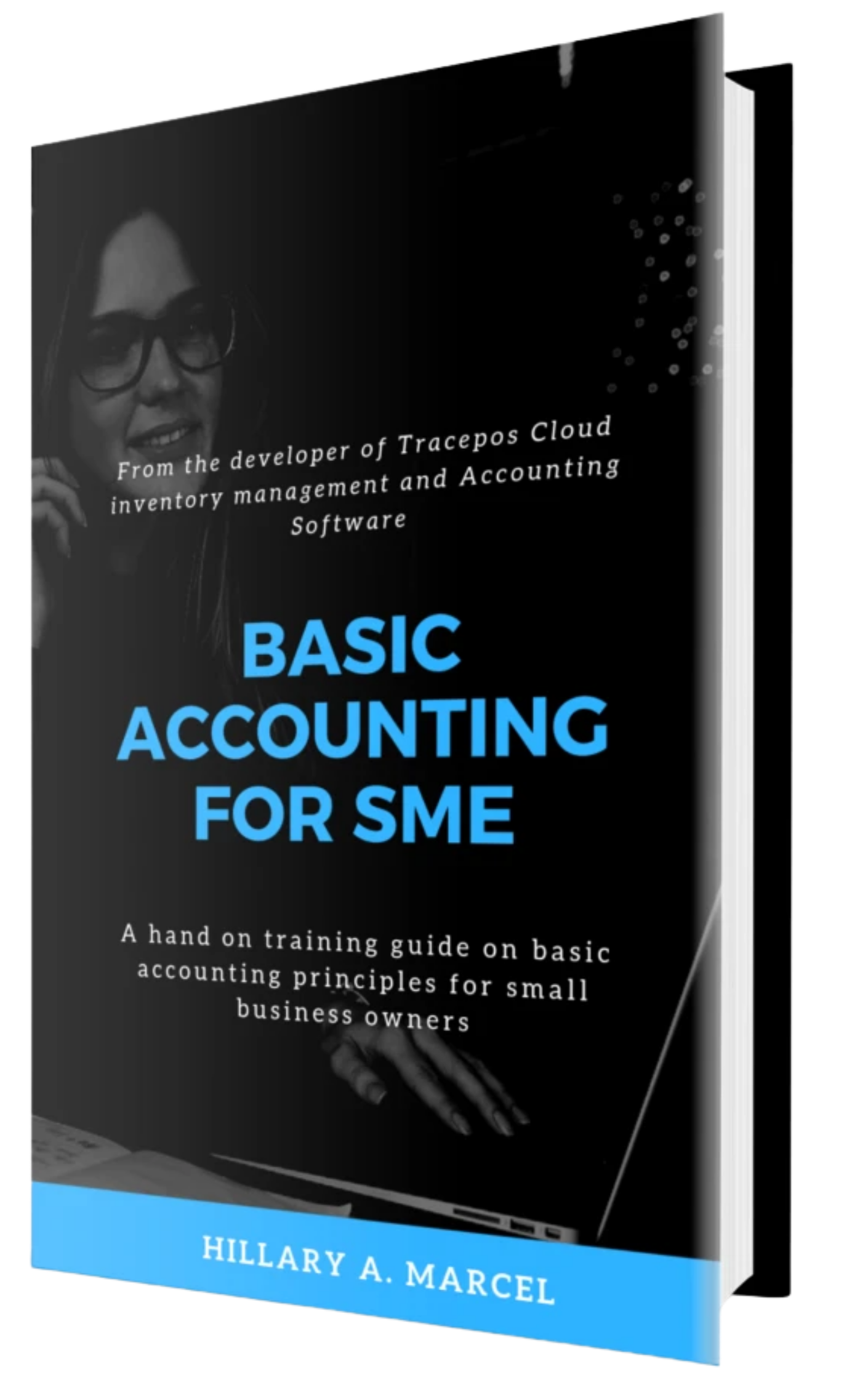
Without bookkeeping, you are simply doing business with hope. You keep struggling, hoping that things will get better. You look at your daily sales and hope you are making a profit, but when it is time to restock, the money is nowhere to be found.
Although bookkeeping might sound boring to some, those who have the knowledge enjoy the ultimate business superpower: Absolute Control.
When you know your numbers, you gain the ultimate business leverage. Stop guessing and start leading your business with hard data.
See what's inside arrow_downwardYou gain full, absolute control over your business cash flow. Know your exact cash position every single day - no more guessing.
Build iron-clad confidence in both your personal and business finances. Walk into any bank or investor meeting knowing your numbers cold.
Know exactly what part of your business is making money and what is secretly draining it. Stop subsidizing losses with your own pocket.
Instantly identify exactly where to cut costs and where to double down. Make data-driven decisions like the big businesses do.
This isn't boring corporate accounting theory. It is a practical bookkeeping survival guide designed for real Nigerian small business owners - no prior knowledge needed.
Understand the exact meaning of business and the critical role basic accounting plays in the survival and growth of every Nigerian SME.
Discover why mixing your personal and business funds is quietly killing your profit. This single rule change will transform your finances immediately.
Learn the foolproof way to use a Cash Book to verify and balance your cash position every single day. This alone prevents most SME cash crises.
Master the fundamental accounting equation - Assets = Liabilities + Equity - and see exactly what your business is worth at any moment.
Finally understand how to apply debit and credit rules in your daily business operations - explained in plain language without confusing jargon.
Identify the most embarrassing, costly bookkeeping mistakes Nigerian small business owners make every day - and exactly how to avoid them.
Everything you need to understand before you open your cash book
The number one reason Nigerian small businesses collapse is not a lack of sales - it is a lack of financial visibility. Business owners work hard every day, make sales, and still find themselves unable to pay suppliers, cover salaries, or restock inventory. The money comes in, but somehow it always disappears.
This happens because without basic bookkeeping, there is no way to distinguish between revenue and profit. A shop owner who makes ₦500,000 in monthly sales but has ₦480,000 in expenses is not making ₦500,000 - they are making ₦20,000. Without records, that owner spends like they have ₦500,000. That is how thriving businesses suddenly "collapse."
Basic accounting for your SME is not about becoming an accountant. It is about gaining enough financial clarity to run your business like a professional.
A cash book is the simplest and most important accounting tool for any Nigerian small business. It is a written or digital record of every Naira that enters your business and every Naira that leaves it - organized by date.
Every morning, when you open your shop, you should know exactly how much cash you have on hand. Every evening, your cash book should confirm that the money you counted matches what your records say you should have. This daily reconciliation is what separates businesses that grow from businesses that struggle.
The Automated Daily Cash Book Excel Template included in this package removes all the math. You simply type your receipts and payments, and the formulas handle everything automatically - telling you your exact cash balance at any moment.
Every Nigerian business owner who uses a bank account has experienced this: the money in your bank statement does not match the money you believe you have. Sometimes it is a missing transfer. Sometimes it is a bank charge you were not notified about. Sometimes it is employee theft disguised as a bank error.
Bank reconciliation is the process of matching your internal business records against your bank statement - line by line - to catch every discrepancy before it becomes a problem. For small businesses in Nigeria, this is not optional. It is survival.
The Bank Reconciliation Tracker included in this package makes this process simple. It takes a task that used to require an accountant and makes it something any business owner can do in 15 minutes per week.
One of the most fundamental principles in basic accounting - and the one most commonly violated by Nigerian SME owners - is the business entity principle. This principle states that your personal finances and your business finances must be treated as completely separate entities.
When you dip into your business cash to pay a personal bill, you are not "borrowing" from yourself - you are creating an invisible hole in your business finances that never gets recorded. Over months, these small, unrecorded transfers accumulate into the reason your business can never seem to grow, no matter how well it sells.
This guide walks you through how to enforce this separation in practice - with clear, Nigerian business context that applies to suya sellers, boutique owners, distributors, and everything in between.
Many Nigerian business owners believe they need to hire a professional accountant before they can manage their finances properly. This is a common and costly misconception. Basic bookkeeping - the daily recording of transactions, maintaining a cash book, and doing monthly bank reconciliations - is something every business owner can and should do themselves.
A professional accountant becomes valuable when your business grows to the point of needing audited financial statements, tax filings, or complex financial reporting. But at the SME stage, you do not need an accountant to know whether you made a profit last month. You need a cash book and the knowledge to use it.
This guide bridges that gap - it gives you the knowledge of a professional in language that any business owner can act on from day one.
Many Nigerian business owners search for a free accounting book - and that is completely understandable. Before you spend time hunting for a free PDF download, consider what you actually need: not a textbook to pass an exam, but a practical guide written specifically for running a Nigerian small business.
Most free accounting PDFs circulating online are either scanned university textbooks, outdated corporate accounting manuals, or content not adapted to the Nigerian business environment. They explain concepts for accountants, not for shop owners, caterers, distributors, and market traders.
Basic Accounting for SME costs just ₦5,000 - roughly the cost of a plate of food at a restaurant - and delivers immediately practical knowledge with two ready-to-use Excel tools. It is the best accounting book for Nigerian SMEs that is written in plain language, rooted in Nigerian business realities, and ready to put to work the same day you download it.
Financial Accounting Made Simple by Robert O. Igben is one of the most respected accounting textbooks in Nigeria. It is the standard reference used in universities, polytechnics, and for ICAN professional examinations. If you are studying to become a professional accountant or need to pass a finance exam, Igben's book is an excellent choice.
However, Igben's text is written for accounting students and professionals - it covers advanced topics like partnership accounts, company financial statements, IFRS compliance, and complex journal entries that are irrelevant to a small business owner managing a shop or growing a trading business.
Basic Accounting for SME is not a textbook and does not compete with Igben on academic depth. Instead, it fills the gap that Igben's book deliberately leaves: how do I, as a Nigerian business owner with no accounting background, manage my daily cash, understand my numbers, and stop my business from hemorrhaging money? If that is your question, this is your answer.
Accounting software tools like Usawa Books, Sage, and QuickBooks are powerful platforms designed for businesses that are ready to automate their financial workflows. They offer invoicing, payroll processing, inventory management, and real-time reporting - all valuable capabilities for a growing business.
But here is the hard truth most software vendors will not tell you: if you do not understand basic accounting principles, software will not save you. It will simply automate your confusion. Business owners who jump into accounting software without foundational knowledge routinely enter transactions in the wrong categories, misclassify income and expenses, and produce financial reports that are worse than useless - because they appear accurate while being completely wrong.
The right sequence is: first, understand the principles - what a cash book is, what debit and credit mean, how bank reconciliation works, why the entity rule matters. Then, adopt software to automate those principles at scale. This guide is step one. It takes you from zero to financial clarity, so that when you eventually adopt any accounting software or work with a professional accountant, you are in full control of your numbers rather than dependent on someone else to interpret them for you.
When Nigerian small business owners search for the best accounting book for SMEs, they are typically looking for one of three things: an affordable guide they can understand without a finance background, practical tools they can start using immediately, and content that reflects the reality of doing business in Nigeria - not in the UK or the US.
Basic Accounting for SME by Agbo Marcel Hillary meets all three criteria. Written by a Nigerian entrepreneur with over a decade of experience building financial software for Nigerian businesses, the guide addresses the specific traps that Nigerian SMEs fall into - mixing personal and business money, failing to reconcile bank statements, misunderstanding what sales figures actually mean for profitability.
It comes with two free downloadable Excel templates - an Automated Daily Cash Book and a Bank Reconciliation Tracker - that you can begin using the same day you purchase. No accounting degree required. No software subscription. Just clear knowledge and ready-to-use tools, at a one-time price of ₦5,000.
Real results from business owners who stopped guessing and took control of their numbers.
"I used to dread checking my bank balance. This guide gave me the absolute clarity I needed to understand where my money was going. I finally feel in control of my boutique's growth."
Bisi O.
Boutique Owner, Lagos
"The entity rule chapter was a game-changer for me. Separating my personal funds from my business has stopped the constant cash leakages I could never explain. Simple, clear, and highly effective."
Chidi N.
Supermarket Manager, Abuja
"The automated cash book template alone is worth ten times the price. I no longer have restock crises because I know my exact cash position every single day. My catering business has never been healthier."
Fatima A.
Catering Services, Kano
Plug-and-Play Financial Tools for Nigerian SMEs
Excel Template - Ready to Use Instantly
Stop using pen and paper. Just enter your daily receipts and payments, and the built-in formulas automatically calculate your exact cash on hand. No accounting knowledge or math required. Works with Microsoft Excel and Google Sheets.
Excel Template - Ready to Use Instantly
Catch missing funds instantly. This ready-to-use spreadsheet helps you match your bank statement directly against your shop records to ensure not a single Naira is unaccounted for. Stop losing money to undetected errors and charges.
I am the founder and CEO of Tracepos, a cloud-based business management platform designed to help Nigerian SMEs gain full control of their inventory, accounting, and payroll.
With over a decade of hands-on experience building POS and fintech software for Nigerian businesses, I have seen firsthand how the absence of basic bookkeeping knowledge destroys otherwise viable businesses.
I wrote Basic Accounting for SME because every Nigerian business owner - no matter the size of their shop - deserves to understand their numbers. This guide is the practical starting point I wish existed when I was helping businesses grow.

Common questions from Nigerian small business owners about basic accounting and this guide.
Not at all. This guide is specifically designed for beginners and Nigerian SME owners who want to understand their numbers without complex corporate jargon. If you can read and count, you can follow every chapter.
This guide is designed for any Nigerian small or medium-sized business - shops, supermarkets, boutiques, restaurants, catering businesses, pharmacies, distributors, petty traders, and service providers. If you handle cash and want to understand your numbers, this guide is for you.
Hiring an accountant in Nigeria costs between ₦30,000 and ₦150,000 per month for basic services. This guide teaches you to handle your own daily bookkeeping so you are not dependent on someone else to understand your own business. When you eventually grow and need a professional accountant, your records will already be clean - saving you money on their time.
Access is instant. Once your payment is confirmed via Paystack, you will receive an automated email with download links for the PDF guide and both Excel templates - the Automated Daily Cash Book and the Bank Reconciliation Tracker.
The templates are optimized for Microsoft Excel on desktop or tablet for the best experience, but they can also be opened and edited with Google Sheets on mobile devices.
Yes, all payments are processed securely via Paystack, West Africa's leading payment gateway. You can pay via Card, Bank Transfer, or USSD. We do not store your card details.
Robert Igben's book is an excellent academic textbook written for accounting students, ICAN candidates, and finance professionals. It covers advanced topics like partnership accounts, IFRS compliance, and company financial statements - content you will not use in a small shop or trading business. Basic Accounting for SME is written for Nigerian business owners with no accounting background. It covers the practical daily bookkeeping skills you actually need, and comes with two ready-to-use Excel tools you can start using today.
Most "free" accounting PDFs circulating online are scanned university textbooks or outdated corporate accounting manuals not written for Nigerian SME owners. Basic Accounting for SME is available for a one-time payment of ₦5,000 and includes two free Excel templates - the Automated Daily Cash Book and the Bank Reconciliation Tracker - valued at ₦15,000. It is practical, affordable, and written specifically for Nigerian small businesses.
Start mastering your business numbers today - one-time payment, instant access.
One-time payment. No subscription. Instant email delivery.
Get The Package Now lockNeed Help? Contact Support
WhatsApp: 08067139080